The vast and unpredictable altitudes of the Himalayas present some of the most challenging environments on the planet for motorcycle riders and high-altitude adventurers. When dense storm clouds gather over towering mountain passes, the question of Gore-Tex vs rain poncho becomes a critical matter of safety, comfort, and survival. Facing sudden squalls, freezing rain, and plunging temperatures requires an in-depth understanding of technical gear and its limits. The debate surrounding Gore-Tex vs rain poncho is not just about aesthetic preference or minor comfort; it is about surviving an unforgiving ecosystem where the margin for error is razor-thin. In this comprehensive technical analysis, we will explore the science, real-world performance metrics, and economic realities behind the Gore-Tex vs rain poncho dilemma, examining exactly what happens when extreme weather strikes.
Harsh Himalayan Weather Conditions
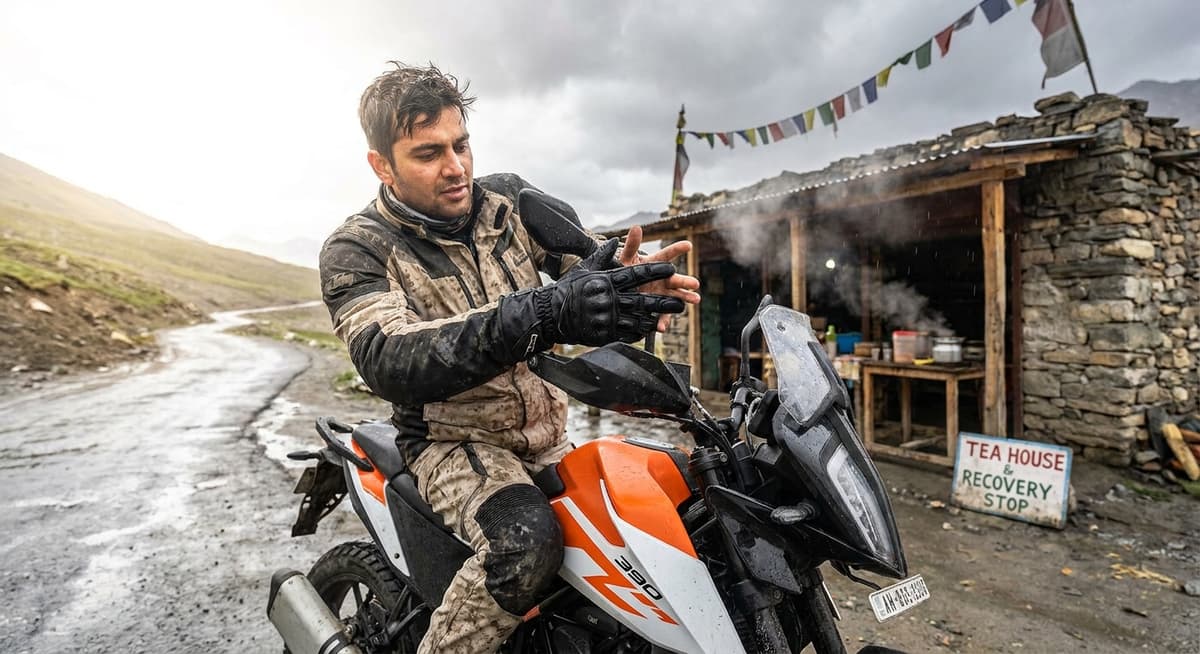
Understanding the volatile Himalayan environment is the first step in resolving the Gore-Tex vs rain poncho debate. The region is historically infamous for its highly localized microclimates, where a crystal-clear morning can instantly transform into a blinding tempest. Adventurers frequently encounter sudden, heavy downpours with precipitation rates reaching an astonishing 50 to 100mm per hour. These torrential rains are almost always coupled with plummeting temperatures that regularly hover between 0 and 10 degrees Celsius, drastically increasing the risk of rapid-onset hypothermia if a rider’s gear fails to keep them dry. When evaluating Gore-Tex vs rain poncho options, one must also account for the intense, relentless wind speeds. At high-altitude thoroughfares like Thorong La pass, winds can easily rage between 20 to 60 mph, creating an inescapable wind chill effect. These severe meteorological factors put extreme physical stress on any waterproof layer, exploiting even the smallest weaknesses in seams or fabric. Therefore, examining Gore-Tex vs rain poncho effectiveness under such extreme duress is absolutely essential for any serious expedition into the high mountains.
Waterproofing Capabilities and Technology
At the very core of the Gore-Tex vs rain poncho discussion lies the fundamental difference in waterproofing technology and material engineering. Gore-Tex jackets utilize highly advanced microporous membranes to achieve an intricate balance of breathability and extreme water resistance. These micropores are approximately 20,000 times smaller than a single liquid water droplet, yet they are 700 times larger than a moisture vapor molecule. This precise microscopic engineering allows body heat and sweat to escape naturally while completely preventing external rain from entering. This exact science results in an impressive hydrostatic head rating of over 20,000mm, setting a remarkably high benchmark in the Gore-Tex vs rain poncho comparison. Contrastingly, standard rain ponchos rely on simple, non-breathable physical barriers. A typical recreational poncho provides only 2 to 80 PSI of pressure resistance, which translates to a mere 0.14 to 5.5 meters of hydrostatic head. When looking at ultralight silnylon variants favored by minimalists, the pressure resistance drops to approximately 2 PSI. This massive gap in technical specifications is a crucial factor in the Gore-Tex vs rain poncho assessment. While a standard poncho acts as a basic, impenetrable shield that traps internal moisture, the microporous membrane of high-end jackets actively manages both internal condensation and external precipitation. Understanding these deep material science differences highlights exactly why the Gore-Tex vs rain poncho argument so often leans toward advanced breathable fabrics in high-exertion, extreme-altitude environments.
Performance and Failure Points in Extreme Weather
Theoretical laboratory numbers mean little until the gear is tested against the brutal, unforgiving reality of the mountains. When evaluating Gore-Tex vs rain poncho performance in the field, specific failure points become glaringly obvious to seasoned travelers. Massive Himalayan thunderstorms can hit with kinetic forces generating up to 16 PSI of sheer rain pressure. Under this relentless barrage, basic coated nylon ponchos often fail and wet out entirely after just 1 to 2 hours of sustained environmental exposure, leaving the wearer soaked and vulnerable. Furthermore, the structural design of the garment plays a major role in the Gore-Tex vs rain poncho debate. Gusty crosswinds exceeding 15 to 20 mph easily catch the loose, billowy fabric of a traditional poncho. This causes the garment to flap wildly, exposing the rider to the freezing elements and severely compromising balance. This lack of an aerodynamic, tailored fit is a massive vulnerability on exposed mountain ridges. On the other hand, analyzing Gore-Tex vs rain poncho endurance reveals that modern technical jackets hold up remarkably well against structural and environmental abuse. Recent 2026 tests demonstrate that high-performance jackets equipped with updated, eco-friendly ePE membranes, such as the Rab Kinetic Alpine series, maintain an incredible hydrostatic rating above 28,000mm even after significant surface abrasion. The closely fitted design of these technical jackets prevents cold wind infiltration, making the Gore-Tex vs rain poncho choice glaringly clear when facing high-speed mountain gales and horizontal driving rain.
Weight and Longevity Comparisons
Beyond immediate storm protection and breathability, riders and hikers must constantly consider packability and long-term durability, which brings another complex dimension to the Gore-Tex vs rain poncho conversation. Evaluating the physical specifications reveals an interesting parity in overall weight. Premium Gore-Tex jackets built for alpine conditions typically weigh between 300g and 500g, making them highly packable without sacrificing protection. Interestingly, standard rain ponchos sit in a very similar weight range of 200g to 600g, with rugged items like the heavy-duty USGI poncho weighing in at a substantial 567g. Since the carry weight is surprisingly comparable, the Gore-Tex vs rain poncho decision often pivots to overall longevity and lifecycle. High-quality membrane jackets represent a significant long-term investment for the serious adventurer. With proper washing and re-application of Durable Water Repellent coatings, they offer a reliable lifespan of 5 to 10 years of rigorous outdoor use. Conversely, a basic poncho usually degrades quite quickly when subjected to harsh elements. The polyurethane waterproofing coatings on simple ponchos frequently delaminate, peel, or tear under the intense UV light and physical abrasion of mountain travel, resulting in an effective lifespan of merely 1 to 2 seasons. This stark contrast in structural durability makes the Gore-Tex vs rain poncho comparison a practical matter of long-term reliability versus short-term, semi-disposable utility.
2026 Gear Cost Analysis
The final, unavoidable pillar of the Gore-Tex vs rain poncho evaluation is the sheer financial investment required to stay dry. Modern rain protection comes with an incredibly wide range of price tags, reflecting the vast differences in research, development, and manufacturing. In the current 2026 market landscape, premium Gore-Tex Paclite and Shakedry jacket models typically cost anywhere between 250 and 400 dollars. This steep upfront cost essentially secures years of technical performance, breathable comfort, and high-altitude reliability. In stark contrast to this heavy expenditure, an ultralight backup poncho can be easily purchased for approximately 20 dollars at almost any outfitter. While the price difference is undeniably massive, relying entirely on a 20-dollar piece of non-breathable plastic in freezing, high-altitude rain is a dangerous gamble that few experienced guides recommend. Many veterans of the highest mountain passes choose to resolve the Gore-Tex vs rain poncho debate by carrying a high-end waterproof jacket as their primary environmental shield, while simply keeping a cheap, lightweight poncho packed merely as an emergency shelter, a ground tarp, or a secondary layer of static protection. Ultimately, the Gore-Tex vs rain poncho decision highlights the inescapable reality that in the extreme, unpredictable conditions of the high peaks, your specialized gear is effectively your life support system.